

Complete API 608 Compliance Guide
12.02.2025 | Valve Standards & Specifications
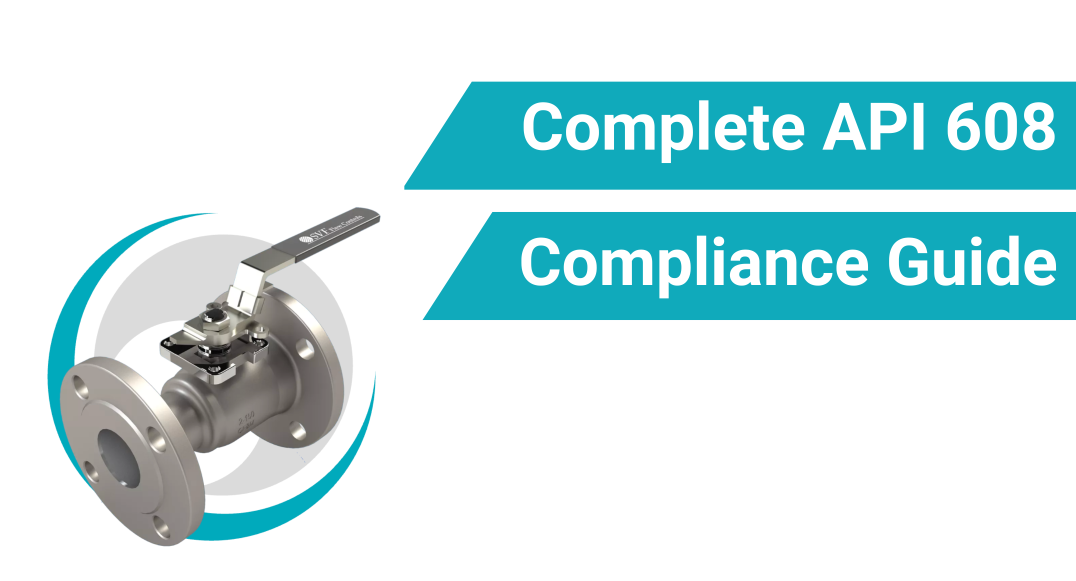
Get a clear overview of API 608 requirements for metal ball valves, including the standard, scope, and valve classifications. This summary covers key design and compliance specifications such as pressure and temperature ratings, bore size requirements, anti-static grounding, stem strength, and restrictions on hollow ball components, along with examples of API 608-compliant ball valves.
Source: SVF Tech Brief No. 1089 — API 608 Standard for Valve Requirements
Table of contents
- What is API 608?
- Scope & Valve Classes Covered
- API 608: Requirements
- SVF Ball Valves Listed as API-608 Compliant
What is API 608?
API 608 is the standard titled “Metal Ball Valves – Flanged, Threaded and Welding Ends”. It covers additional requirements for metal ball valves that are in full conformance with the requirements of ASME B16.34.
Scope & Valve Classes Covered
- Flanged and butt-welding end valves in standard classes 150, 300 and 600.
- Socket welding and threaded end valves in standard classes 150, 300, 600 and 800.
API-608: Requirements
- Valve pressure-temperature rating shall be the lesser of the shell rating or the seat rating.
- Full and reduced port ball valves must meet minimum bore diameter requirements.
- Stem must be electrically “grounded” to the body (anti-static device).
- Hollow ball components are not allowed (unless specifically accepted by the customer).
- Stem torsional strength must be at least twice the maximum operating torque (Safety Factor = 2).
- Torsional failure of the stem must be external to pressure-containing envelope and stem packing.
Anti-Static Device: Additional Detail
Valves should incorporate an anti-static feature ensuring electrical continuity between the stem and the body, or stem, body and ball providing a discharge path with resistance less than 10 ohms.
SVF Flow Control Ball Valves That Comply with API 608
The following SVF valve series as complying with API 608: